


Uinto - Live Chat & Connect
0.00.00 Reviews
App Specs
- Version
- 1.0.6
- Updated On
- License
- Free
- Downloads
- 10,000+
- Developer
- Hamza Munirr
- Categories
- Lifestyle
- Platform
- Android
Screenshots
 Analysis by AppCompare
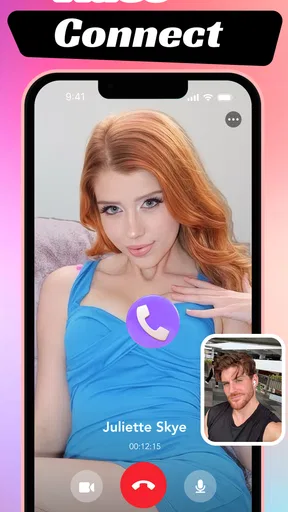
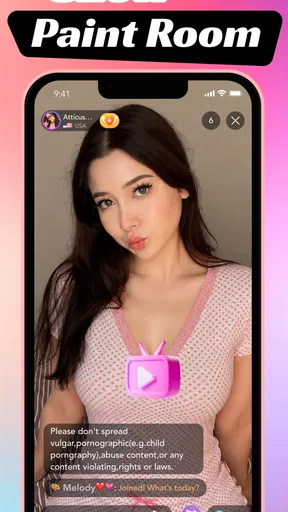
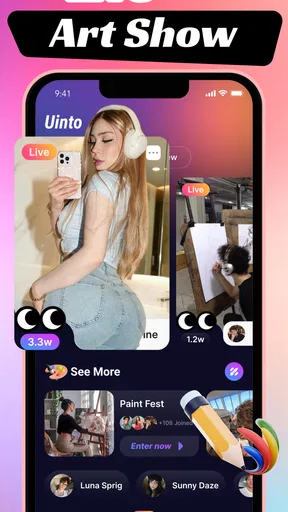
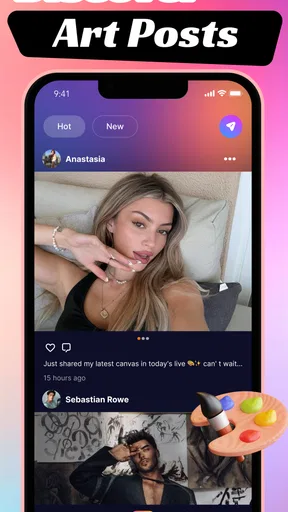
I approached Uinto - Live Chat & Connect as a small, focused lifestyle app rather than a complete creative studio. Its central idea is easy to understand: make something visual, use video as part of the creative process, and share the result. That combination gives the app a more social feel than a traditional drawing tool, although it also means the experience depends on what you want to create and how much interaction you expect from the app.
My first impression was that Uinto is best suited to casual creativity. I would recommend it to someone who wants a simple place to experiment with painting and then show the result, especially when the goal is expression rather than professional production. The store summary, “Paint,Video,Share Art,” points toward that compact purpose, while the short description, “Uinto,” does not explain much on its own. In practice, I found that the useful question is not whether it replaces a full art suite, but whether it makes sharing a quick creative moment feel approachable.
Getting from installation to a meaningful first result
I’d use the first session to test the whole creative loop, not just the painting tools: make a small, low-stakes image, consider how video fits into presenting it, and decide whether sharing feels natural. That gives you a useful basis for judging the app without committing to a big project or purchase. Once you know where the process feels smooth or awkward, the next section can help set realistic expectations.
What to expect before you begin
Uinto is a free lifestyle app from Hamza Munirr, with optional purchases ranging from $0.99 to $99.99 per item. That pricing structure is worth keeping in mind before you explore deeply. You can start without paying, but I would still look carefully at any purchase prompt and decide whether the extra option genuinely helps your particular workflow. A free starting point is useful for testing the app, especially because the experience will appeal to some people much more than others.
The app is intended for Teen users and runs on Android 7.0 or later. It has reached over 10 thousand installs, which gives it the feel of a smaller, developing product rather than a large mainstream network. The current version is 1.0.6, so I would approach it with realistic expectations: it is a place to try a creative and sharing-oriented concept, not necessarily the polished replacement for every drawing, editing, or social app already on your phone.
That distinction matters because the word “video” can create several expectations. Some people may imagine a full editor with timelines, transitions, sound controls, and export tools. Others may expect live broadcasting or video chat. I would not install Uinto assuming it automatically offers all of those things. Its clearest identity is the relationship between painting, visual content, and sharing. If you want a quick creative outlet, that is encouraging. If your main goal is detailed video production, a dedicated editor will probably be a better fit.
Setting up without overthinking the first session
For a first session, I suggest keeping your goal deliberately small. Do not begin by planning a finished illustration or a complicated video project. Open the app, look at the available creative area, and make one simple piece that you can understand from beginning to end. A few colors, a basic shape, or a loose sketch is enough. The point is to learn how Uinto connects the act of making with the act of sharing.
Worth Reading Before You Choose

EA SPORTS FC Mobile 26 Is a Bigger Football Game, but It Takes Time

Flipboard Shows What News Apps Must Do Beyond the Feed

Switching to Android Auto Means Rethinking Your Driving Routine

Google Calendar Makes a Crowded Week Easier to Manage

Ludo King Makes the Most of the Minutes Between Plans

Baby Panda World Brings Quick Play to Modern Phones, but Its Game Library Feels Busy
I also recommend deciding in advance what “finished” means for you. With a conventional painting app, finished may mean a high-resolution image with carefully arranged layers. In Uinto, a more practical definition could be a visual idea that is clear enough to show another person. That change in mindset makes the first experience less frustrating. You are testing the app’s creative rhythm, not trying to prove that it can replace professional software.
Because the app includes sharing as part of its identity, pause before sending anything publicly or to another person. A quick sketch can feel harmless while you are making it, but once it leaves your device, it may be viewed outside the context you intended. I treat the first creation as a test piece and review it once before sharing. That habit is especially sensible for younger users and for anyone experimenting with personal subjects.
The Teen content rating is another reason to use ordinary online judgment. I would not treat it as a substitute for thinking about what I create or share. The safest way to start is with a neutral drawing, a color experiment, or an everyday scene. That gives you a clear way to judge the tools and the sharing flow without mixing your first test with sensitive material.
Your first successful action should be deliberately simple
My recommended first success is a tiny visual postcard: choose a background, add one recognizable object, give it a few colors, and prepare it for sharing. This workflow tests the three ideas that make Uinto distinctive without demanding advanced artistic skill. You learn whether painting feels comfortable, whether the video-oriented part adds value to your process, and whether sharing is convenient enough to use again.
For example, I might draw a cup beside a window, use a limited palette, and stop before polishing every edge. The subject is ordinary, but that is an advantage. If the app helps me turn a simple observation into something shareable, I understand its everyday purpose. If I need extensive correction tools or precise control to make the result acceptable, I also learn quickly that a specialized art app may suit me better.
A useful technique is to create in stages rather than trying to finish in one burst. Start with the broad shapes, add the main colors, and then decide whether the video or sharing element deserves attention. This separates creative decisions from presentation decisions. It also makes it easier to notice where friction occurs. If painting feels smooth but preparing the result feels awkward, your issue is not artistic ability; it is the app’s workflow.
Another non-obvious benefit of this small-project approach is that it gives you a repeatable test. Make a second piece using the same basic idea but a different subject. Compare how much effort it takes to reach a shareable result. That comparison is more useful than judging the app from one unusually successful drawing. It tells you whether Uinto supports a habit or merely produces an interesting first impression.
How the painting, video, and sharing ideas fit together
Uinto’s appeal comes from combining activities that are often separated across different apps. Normally, I might draw in one application, record or edit in another, and then use a social platform to show the result. A combined workflow can feel lighter because the creative object and its presentation are considered together. For casual users, avoiding several app switches may be the biggest practical advantage.
There is a trade-off, though. A focused painting application usually gives more room to refine brushes, colors, composition, and corrections. A dedicated video editor usually provides clearer control over timing and presentation. A large social platform usually offers a bigger audience and more familiar sharing habits. Uinto sits between those categories. Its strength is the connection between them, while its weakness is that users who need depth in one specific area may find the combined approach less satisfying.
I would therefore compare it with alternatives by asking what I value most. If I want to practice drawing seriously, I would choose a drawing-first app. If I want to create polished clips, I would choose a video-first app. If I want immediate audience reach, I would choose an established social service. I would choose Uinto when I want the creative act and the act of showing it to feel like one compact activity.
This is also where the app’s small scale may be relevant. With over 10 thousand installs, it is not something I would approach expecting the same breadth of community activity as a major social network. That is not automatically a flaw. A smaller environment can feel less overwhelming, but it may also provide less discovery and fewer people to interact with. Your decision should depend on whether you want a personal creative tool with sharing or a busy public destination.
Confusion points that can affect the first-time experience
The biggest possible confusion is the app’s name and brief store wording. “Live Chat & Connect” suggests conversation may be central, while the summary emphasizes painting, video, and art sharing. I would not assume that the social title tells the whole story. Start by exploring the creative path first, then see how connection and sharing fit around it. This prevents you from judging the app as a conventional messaging service before understanding its artistic purpose.
A second source of uncertainty is the role of video. When an app places painting and video side by side, it can be difficult to know whether video is the main medium, a way to document the creation process, or simply another kind of content to share. Rather than searching for a complicated interpretation, I would test the shortest available path from a drawing to a shareable visual result. That practical test tells you more than the label alone.
Purchases can create another moment of hesitation. Since optional items can cost from $0.99 to $99.99, I would avoid buying anything during the first experiment. Use the free experience to identify the exact limitation you are trying to solve. If you cannot describe that limitation clearly, the purchase is probably premature. This is particularly important for a creative app, where enthusiasm can make a large upgrade seem necessary before you have established a regular habit.
I would also keep expectations realistic around organization. A quick creative app can be enjoyable for individual experiments, but people with a large archive may want a separate method for naming, backing up, and arranging their work. Even when sharing is convenient, it does not automatically replace a personal collection. My practical solution would be to keep important originals organized outside the app and treat Uinto as the place where I create or present selected pieces.
There is a similar distinction between sharing art and building an audience. Sharing a piece may be easy enough, but that does not mean the app will provide the reach, feedback, or community activity of a mature social network. I would use it to show work to people I already know or to participate in the kind of interaction the app actually supports, rather than installing it with the expectation of immediate visibility.
Small workflows that make the app more useful
One workflow I found sensible is the “daily fragment” approach. Instead of attempting a finished artwork, make one small visual note each day: a meal, a street view, a pattern, or a mood represented by color. The video and sharing angle can make these fragments feel more presentable than a private doodle, while the low commitment reduces the pressure to be perfect. After several sessions, you can decide whether the app supports a genuine creative routine.
A second workflow is useful for people who dislike posting unfinished work. Create privately until the composition is readable, then use the sharing step only after removing anything you would not want others to see. This creates a clear boundary between experimentation and publication. It also helps you identify whether Uinto respects your preferred pace, because some users want immediate social interaction while others need time to prepare their work.
A third approach is to use it as a bridge between a physical idea and a digital share. I might sketch a rough concept on paper, recreate only the essential shapes in Uinto, and then decide whether the visual presentation is worth sharing. This is not the fastest route for every project, but it is useful when I want a casual digital version without committing to a complex design program.
For families or younger creators, I would make the first project collaborative in conversation rather than assuming the app itself provides every collaboration feature. One person can suggest a subject, another can choose colors, and the final result can be reviewed before sharing. That turns the app into a low-pressure creative activity while keeping decisions about privacy and audience in human hands.
Who will enjoy Uinto, and who should choose something else?
I think Uinto is a good match for a beginner who wants to paint casually and share visual ideas without assembling a workflow from several separate tools. It may also suit someone who enjoys documenting creative experiments, sending small art pieces to friends, or exploring whether a social art habit feels motivating. The free entry point makes that trial relatively approachable, provided you remain attentive to optional purchases.
I would be more cautious recommending it to a professional illustrator, a serious digital painter, or a creator whose income depends on precise production controls. Those users usually need dependable depth, repeatable editing, strong organization, and a clear export routine. A dedicated art application is likely to be more appropriate. The same applies to anyone primarily looking for live conversation, because the creative focus may not match the expectations created by the “Live Chat & Connect” name.
It is also not my first choice for someone who wants a large, established audience. A larger social platform may offer more discovery, while a dedicated video editor may make polished clips easier to produce. Uinto becomes more convincing when convenience and creative sharing matter more than maximum control or maximum reach.
My next-step recommendation
After the first successful drawing, I would not immediately purchase anything or attempt a major project. I would make three small pieces with different purposes: one simple painting, one piece where video or presentation matters, and one intended for sharing with a specific person. This gives you a practical answer to the questions that matter most: Do you enjoy making things here? Does the presentation add anything? Is sharing actually easier than your current method?
If the answer is yes, keep using a consistent format, such as a daily fragment or a weekly visual message. Consistency will reveal Uinto’s real value better than a single impressive session. If the answer is mixed, keep the part you enjoy and move the rest to a more specialized tool. There is no reason to force one app to handle every stage of a creative process.
My overall view is that Uinto - Live Chat & Connect is an interesting free lifestyle app for casual painting and art sharing, especially for first-time creators who want a gentle route from making something to showing it. Its main strength is the compact idea linking visual creation, video, and connection. Its main limitation is the same: users seeking deep painting controls, advanced video production, or a large social audience may outgrow that compact approach.
My advice is to treat Uinto as a low-pressure creative starting point, not as an all-purpose replacement for your favorite art, video, or social apps. Make one small piece, review it before sharing, ignore purchases until you understand your needs, and then decide whether the app earns a regular place on your phone. For the right user, that simple path can turn a vague creative impulse into something visible and shareable.
Pros
- Simple interface makes starting conversations quick and approachable.
- Live chat format encourages spontaneous
- real-time interactions.
- Useful for meeting people beyond your existing social circle.
- Profile discovery can help users find contacts with shared interests.
- Mobile design supports convenient chatting while on the go.
Cons
- The quality of conversations may vary considerably between users.
- Live interactions can require frequent availability and quick replies.
- New users may find it difficult to build meaningful connections.
- Privacy settings should be checked carefully before sharing personal details.
- Some features or interactions may depend on in-app purchases.
FAQs for Uinto - Live Chat & Connect
What is Uinto - Live Chat & Connect used for?
Uinto - Live Chat & Connect is designed for meeting and communicating with other people through live conversations. Depending on the available features and your location, you may be able to discover profiles, start private chats, and interact with users in real time. It is best suited to people looking for casual social connections, but you should review the app’s current description and community guidelines before downloading.
Is Uinto - Live Chat & Connect free to download and use?
The app may be available as a free download, but some functions can require in-app purchases, credits, subscriptions, or other paid upgrades. Features such as extended messaging, profile visibility, or additional communication options may not be included in the basic version. Before creating an account or making a payment, check the store listing carefully for current pricing, renewal terms, and cancellation instructions.
Do I need to create an account to use Uinto?
Most live-chat and social-connection apps require users to register before they can send messages or access the main community features. Uinto may ask for information such as an email address, phone number, username, age, or profile details. Use accurate information where necessary, choose a strong password, and read the privacy policy to understand how your data and conversations may be handled.
Is Uinto - Live Chat & Connect safe for everyone?
Uinto should be used responsibly, particularly because live-chat platforms can connect you with strangers. Avoid sharing your home address, financial information, passwords, private documents, or intimate content with other users. Be cautious of suspicious links, requests for money, or pressure to move conversations elsewhere. Use blocking and reporting tools whenever available, and follow the app’s age restrictions and safety rules.
What should I check before downloading Uinto on Android or iPhone?
Before installing Uinto, check whether your device meets the required Android or iOS version and whether sufficient storage, microphone, camera, and notification permissions may be needed. Also review recent user ratings, developer information, privacy disclosures, subscription details, and the app’s data-collection practices. Availability and features can vary by country, so confirm that the service is supported in your region.


